

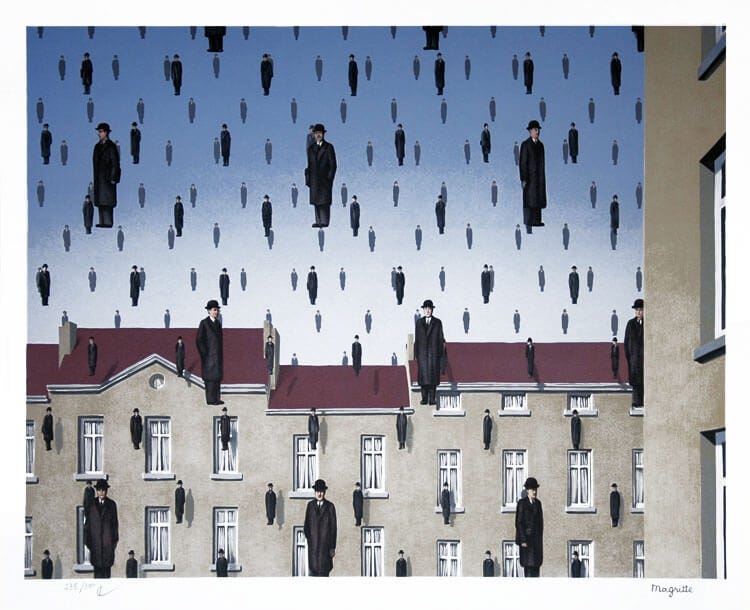
In recent years, the sense that my online interactions — on social media, in my work inbox, even Zoom calls — constituted genuine human-to-human interactions has become increasingly tenuous. Now, with AI infiltrating seemingly every article, post, and email (and, apparently, even video calls), the very idea of finding a sense of humanity online has effectively disappeared.
Being as I am happily self-employed, I spend an unfortunate amount of time on LinkedIn (one must earn one’s freedom somehow). If AI has ruined any platform, it is undoubtedly LinkedIn. Virtually every post is now dripping with AI’s signature over-dramatic and underwhelming style.
The slopfest that is LinkedIn has gotten so bad that even a post (mine) breaking down AI’s uninspiring style is met with comments like this one:
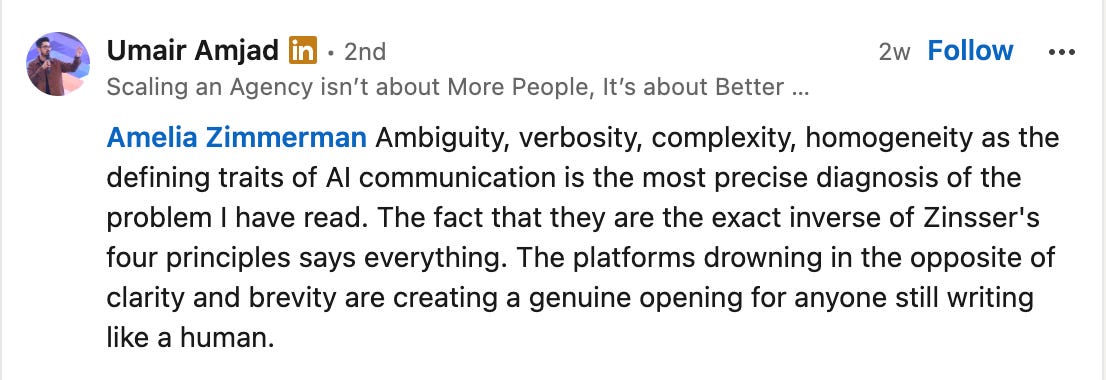
Yep, AI. (This guy subsequently sent me a connection request, with a fully AI-generated message that made zero sense. What exactly he was hoping to gain, I can’t fathom.)
So yeah, at this point, as someone who actually rather enjoys my little writing job and is particularly sensitive to the shitty written content clogging up our shared spaces, I’d certainly be happy to never hear about AI ever again, or at least until it cures cancer. As a person who likes to make things and believes the process is kind of, well, the whole point, the propaganda around AI is so uninspiring that it borders on terrifying, and has sent people like me burrowing further into the ground.
There are so many things we want more than AI right now — a house, maybe; an atmosphere not breaching 430 ppm; bees and glaciers and enough time in the day to feel human.
Some months ago I wrote about William Zinsser’s four principles of good non-fiction writing: clarity, brevity, simplicity, humanity. Briefly:
Clarity: What are you actually trying to say? This should win out over everything else, including the principles below.
Brevity: Keep it as short as possible (but no shorter — more on that below).
Simplicity: Over-complicating obscures the truth.
Humanity: Be, like, a real person, if possible.
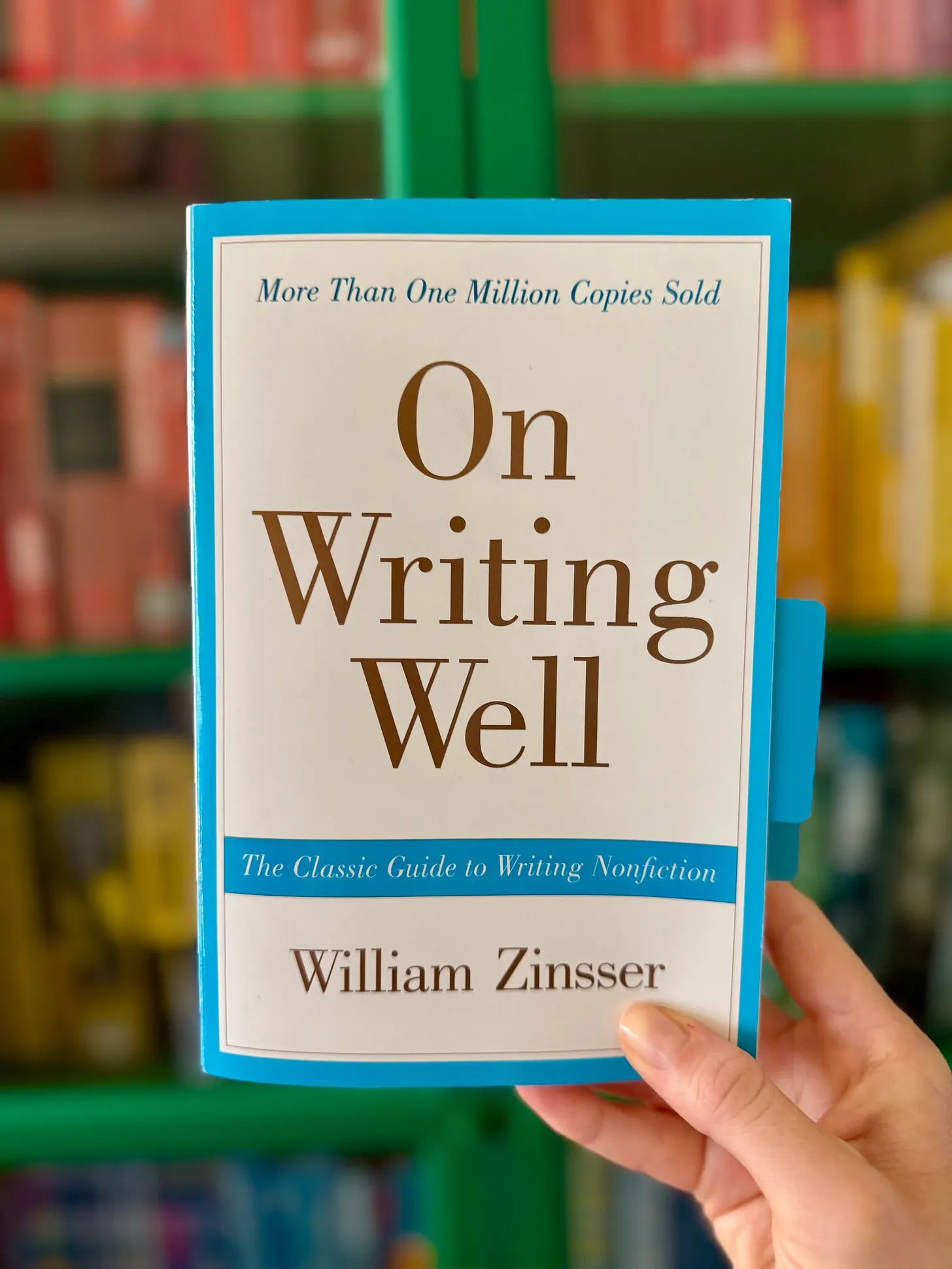
I also keep coming back to Derek Thompson’s summary of Neil Postman’s arguments about television’s communication style: immediacy, emotion, spectacle, brevity. In Everything is Television, Thompson maps these characteristics neatly onto the rise of algorithmic media, which he contends is converging from all sides into a river of short-form video. Let’s unpack these in contrast to Zinsser’s principles:
Immediacy: Quick, fast, no time to think. Everything is urgent.
Emotion: Extreme emotional responses = higher engagement.
Spectacle: The Mr Beast principle. If you’re not over the top, you’re not getting seen.
Brevity: Shorter than Zinsser would want. So short that it oversimplifies; that it keeps us from asking deeper questions.
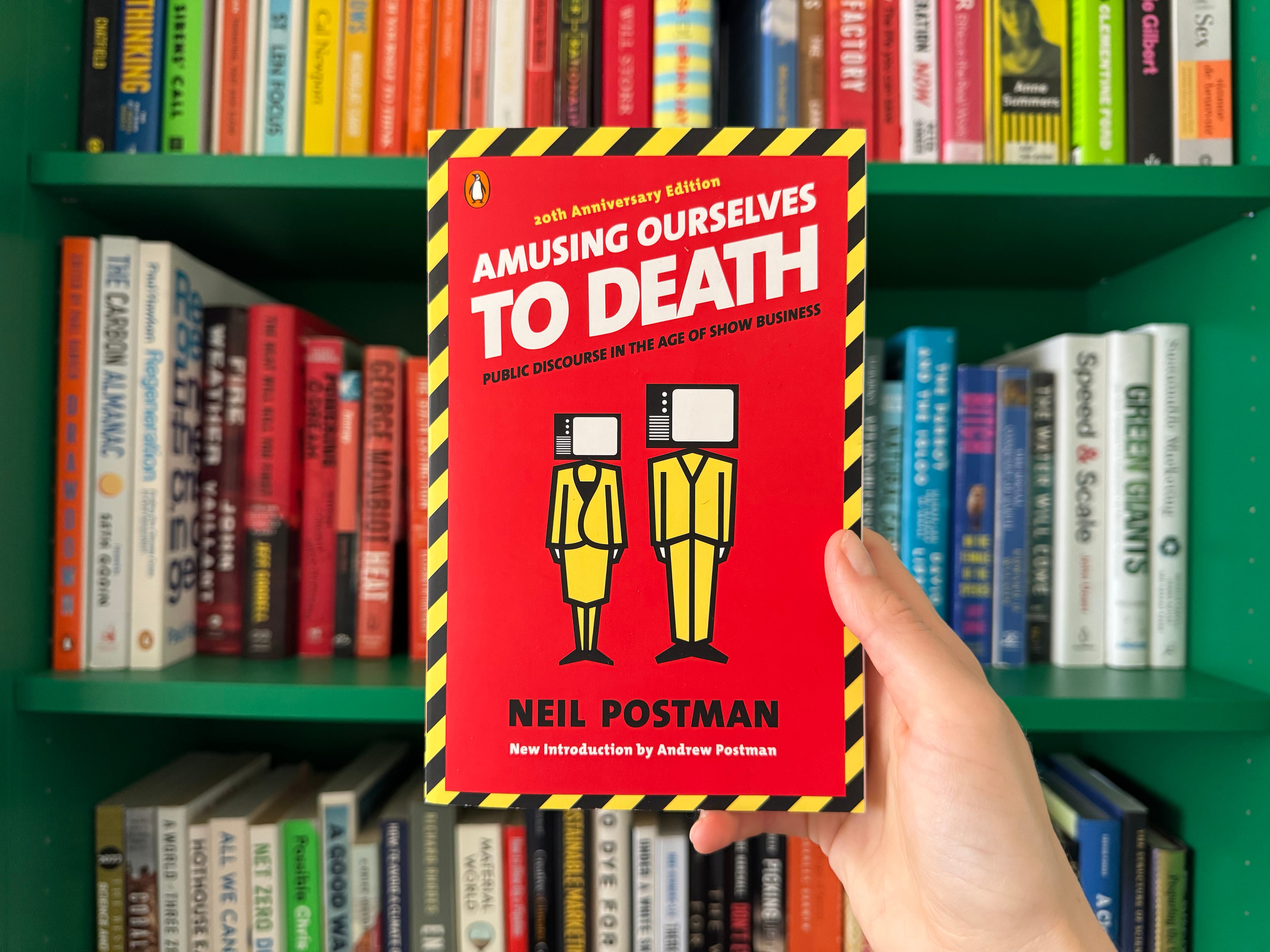
And yet I think television, in all its insidious permutations, is no longer our only source of confusing and uninspiring content — especially not at work. Today we are also dealing with, yes, those great big hulking LLMs.
Inspired by Zinsser and Postman and Thompson, I have identified four key characteristics of the universal LLM communication style (and for some reason it is universal): ambiguity, verbosity, complexity, and homogeneity. Yes, these are Zinsser’s principles flipped for the worse.
Ambiguity: Reach no real conclusions, take no real risks, leave the reader with no groundbreaking takeaways.
Verbosity: This is part of what makes LLM outputs so ambiguous, but it’s also truly exhausting. LLMs don’t get tired like we do. They’ll go for days, or until the tokens run out.
Complexity: Also part of what makes it so verbose. With too much material to work with, it will either go deep into the weeds and immediately overcomplicate the topic at hand, or, when asked to simplify, revert back to surface-level ambiguity.
Homogeneity: It simply cannot sound original. No matter which of the platforms you use or creative prompts you feed it, there is an AI odour that surrounds even the briefest of AI-created copy.
I think it’s worth recognising the gap between the principles of good communication and the general style of what AI tends to produce. I’m not saying AI can’t be helpful in meeting one or many of Zinsser’s criteria. Sometimes it does produce a handy analogy or a simple way of thinking about or communicating something that might genuinely make your communications better.
But for the most part, AI is being used injudiciously in the corporate world, and the platforms are now drowning in content that is ambiguous, verbose, complex, and homogeneous. And really, really dull.
Most of the AI-generated content out there is designed to pursue commercial ends. Now that AI is available to the men in suits, we’re seeing an even greater divide between work produced for business purposes and work produced for the pleasure of calling it art. The divide was always apparent thanks to the takeover of corporate communications by weasel words and legal-team-approved word salad, but it’s about to explode.
What a fatal dichotomy this is: the idea that commerce and art must remain in separate domains. I contend that, in the face of growing brand voice homogenisation (every company now sounds like ChatGPT) and the ease of having simple questions answered by an AI overview rather than navigating to individual webpages and piecing together a research puzzle, the only sane strategy for a company to take to differentiate (at least in the world of content and educational marketing) is to embrace marketing as art. This has long been the winning ticket in advertising, but now other modes of marketing, particularly those designed primarily to educate, will need to adopt this approach.
This means the content marketer’s job in the age of AI overload may no longer be to inform or educate but rather to inspire and to encourage and to entertain. To make content that promises more than a simple transactional experience of search and query. To make something beautiful; something that stays with people long after they’ve closed the tab (or left it to dwell in multi-tab purgatory).
All of this really belongs inside Zinsser’s fourth principle: humanity. This is the realm of inspiration, passion, honesty, vulnerability, magic. This is the realm of art. So permit me one final list of four — a list I think businesses should keep in mind if they wish to gain traction in the age of machines:
Inspire: Why create anything — marketing or not — if it doesn’t inspire? It doesn’t even have to be hopeful; a lot of great art is not particularly hopeful, but it should at least spark something a little deeper in your audience.
Entertain: Many ways to do this: high-stakes tension, humour, vulnerability, personal anecdotes. Whatever makes for a good story.
Authenticate: I’m taking some serious license with this verb. By authenticate, I mean letting a human voice come through unmistakably. With so much slop out there, you’ll probably need two-factor authentication: being doubly personal so that your audience immediately grasps that this is not slop.
Connect: The flipside of authenticating yourself is reaching out to your audience. Acknowledge they exist, acknowledge who they are, acknowledge the context in which they’re operating. On the Internet we have a tendency to shout into the void, but the best art knows its audience (as it happens, so does the best marketing).
The takeaway here is that the divide between commerce and art is a false one. If businesses want to stand out in a world where everything is AI, the best bet is to avoid the most efficient, corporate route to production (the Adam Smith pin factory model) and instead embrace the only thing worth fighting for: art.
Yes, the question of whether it's genuine human-to-human interactions you're having is pretty sad. But also that so many actual creators are changing their work, just not to be accused of using AI... And it just becomes more time consuming to filter through it..
I read an article recently about the influence on researchers and that AI only makes their need to produce more and more much bigger, but because of that the quality becomes worse, because nobody has time to thoroughly review the work anymore. If that's the current state of scientific research, it's more than sad, it's terrifying.
Great insights! I was recently an editorial intern with a magazine and I was shocked how many writers and pitches were clearly using AI. I once sent back suggested edits on a first draft article to an author who has a traditionally published book, and they came back with completely AI-written edits, and they were all of these things you mentioned. I like to say that “AI says a lot of beautiful nothing.” Some phrases I would read and think, hmm this sounds poetic, but what on earth does it mean? Nothing. It’s beautiful nothing. And I’m seeing beautiful nothing everywhere these days...