

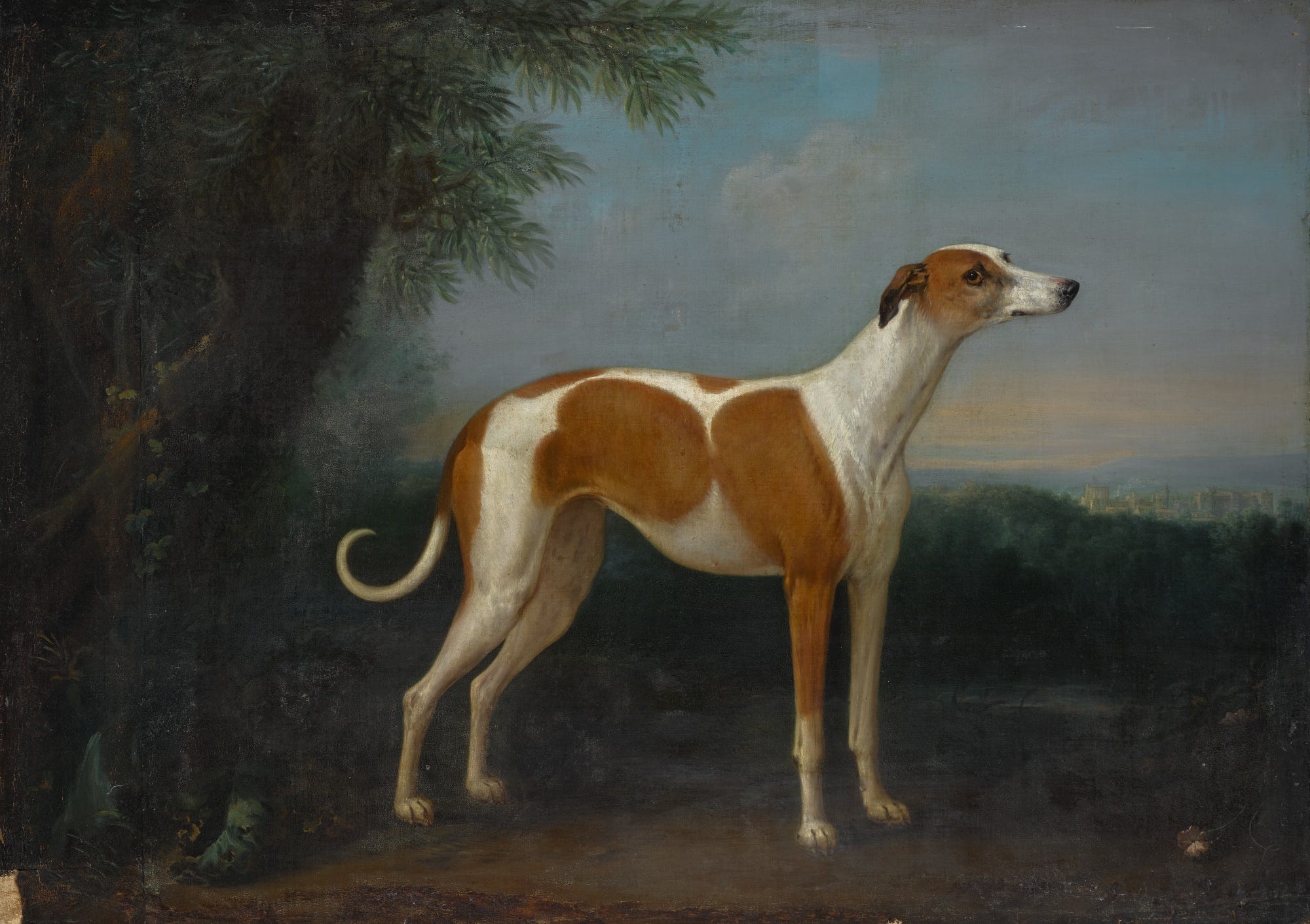
My dog has diarrhoea, and it’s driving me mad. It is a particular kind of diarrhoea reserved, I am convinced, for the moments in our lives when things are just starting to ease off: when my university semester ends, when we’re finally home after weeks away, when a big work project has at last been delivered. I say it is a particular kind of diarrhoea because it is nocturnal: it only appears at night. Every hour, from sundown to sunrise, our little bundle of nervous energy begins to scream (and it is truly a scream) and must be let out into the yard to eke out a teaspoon or so of shapeless slop. In the morning, with the sun risen and her digestive tract apparently all dried up, she will settle down to sleep and won’t have any trouble until sundown.
The first time it came on, we were unprepared. Assuming the first few screams were simply one-offs, we would send her back to her crate and head back to bed. It soon became clear that sleeping in the crate, with the screaming it required to get our attention, was no match for hourly bathroom trips. We relented and allowed her to sleep in the bed with us, taking turns letting her out when she stirred.
This solution worked as well as it could until, re-entering the bedroom in the dark one night at about 3 am, I smelled something concerning. I am particularly sensitive to and alarmed by bad smells, and never more so than in my bedroom in the dead of night. I flicked on the light and discovered the source: she had stepped in her own mess out in the yard, traipsed it all through the house, and into our bedsheets.
Hot wash, new sheets, dog in the bath, back to bed for twenty minutes until the next run. After that, paws are washed in the tub upon re-entering the house. Each morning, we rise in a daze, unsure how exactly we will make it through the day or whether we will ever think about anything other than our dog’s diarrhoea.
If I dare to mention it to friends, the obvious comparison is never far from the conversation. How will you go with a baby? they ask, concerned that I seem unfit to go even a handful of nights sleeping in 45-minute increments. I can practically mouth the words as they are spoken, so predictable is the question. I laugh it off but secretly wonder the same thing.
Does my fatigue after even a single night of interrupted sleep mean I am unfit for parenthood? Does my frustration with her dysfunctional digestive system — something entirely outside of her control — reveal an incapacity for unconditional love?
I have been waiting years for motherhood and I am still not ready for it. I’m not writing enough. Not cooking enough. Not able to go more than twenty-four hours without the kitchen counter clogging up with dishes.
I spend too much money, mostly on books. I am an inconsistent presence at the gym. The latest technological innovation is threatening my only source of income. My pile of books to be read — and in reality it is several piles, a bookcase, and an online shopping cart — only grows.
And maybe these are the inconsequential things. There are other things that concern me even more. I am sure that I am not learned enough. Not journeyed enough. Most definitely not patient enough, not lighthearted enough. I am tight-fisted with praise but quick to criticise. I am, most of the time, not outgoing enough, relaxed enough, assertive enough.
Of all the reasons I am unfit for motherhood, my inability to cope with a dog with an upset stomach is perhaps the least of them.
The late luteal phase is the last week of the menstrual cycle. For me, it is the week that offers the last few remnants of hope that I might indeed be pregnant this time, before it delivers the cramping, agitation, and entirely unreasonable sense of despair that is my clue that I am, once again, not pregnant. One of my special late-luteal-phase symptoms is what is called sleep maintenance insomnia. If, during this last week of my cycle, something wakes me from my sleep, I will not sleep again for at least several hours. Before I discovered the hormonal cause of this disorder, it frequently drove me mad. Now, despite the fatigue that follows, I have learned to embrace these quiet hours of night wakefulness.
Last Christmas, for instance, I spent several witching hours in front of the Christmas tree lights, a mince pie and a glass of almond milk and a book illuminated by my clip-on light. So far, my dog’s curious night-time diarrhoea appears to only visit during the late luteal, which means each trip outside for her leads to several hours of wakefulness for me. Since there are no Christmas lights in July, my nighttime indulgence at the moment is Don Quixote — the gift that keeps on giving. I am reading this tale of the delusional knight errant in the yellow rocking chair I bought from Marketplace. A comfortable spot to nurse the baby, I had figured, though of course there is no baby yet, and I, like Don Quixote de la Mancha, surely have no reason to be as hopeful about the future as I am. Like the misguided knight, I have read too many books and thought for too long about pursuing the very path many people say ruins them. It may well be a delusion, but beneath all the anxiety and self-doubt, something inside me is convinced not only that it will someday happen, but that I may even be alright at it when it does.
And perhaps, unlike Don Quixote, I do have some evidence to offer up for my delusions.
When the nocturnal diarrhoea visits us, our lives become oriented around the evasive and unpredictable movements of a tiny creature’s digestive tract. We have a night-time diarrhoea system in place now, sleeping in shifts with the help of the spare bedroom. I am in the kitchen — a rare sighting — cooking appropriately bland fish (no chicken; it doesn’t sit well with her) and rice (brown or white? Does it need more flavour?). I am at the chemist buying unflavoured fibre supplements to bulk out her stools. I am scouring the internet, investigating safe options for restoring her electrolytes (her skin is a little slow to snap back when pinched, her gums a little tacky), sourcing probiotics, calculating dog-safe doses of human medications.
I am keeping a detailed record of where we’ve been and what she may have been exposed to. I am noting the timings, texture, and colour of her bowel movements — photographing them for posterity. I’m peppering my poor sister, a fourth-year veterinary student, with questions.
The nocturnal diarrhoea, when it arrives, takes over our lives. Perhaps this is because we want it to end, but perhaps it is also because we love her. Yes, I am frustrated — I couldn’t look the vet in the eye when he refused to prescribe her antibiotics today. I am exhausted. I occasionally pretend I haven’t heard her stir in the night, just to see if my partner will get to her first. But I will take her outside every hour and cook her meals and return to the vet, more assertive this time, until we get to the bottom of this.
Despite the incessant chatter in my head about all the reasons I am unfit to bring a human life into the world, I will, at least this time, resist adding my dog’s night-time diarrhoea to the list. This latest instalment of the diarrhoea in the night-time has, especially in the wee hours, made me question my fitness for parenting. On the other hand, it has proven to me that I can be exhausted, frustrated, confused, even a little delusional — and carry on anyway.